Making lifestyle changes with weight loss medication helps you get the most from your treatment. Medicines such as semaglutide (Wegovy) and tirzepatide (Mounjaro) reduce appetite. However, they work best alongside healthy eating and regular activity. In fact, UK licences for these medicines say they should be used together with a reduced-calorie diet and more physical activity. This guide covers the habits that make the biggest difference.
Key takeaways
- Weight loss medicines are meant to be used alongside diet and activity, not instead of them.
- Eating enough protein and fibre helps you feel full and protect muscle.
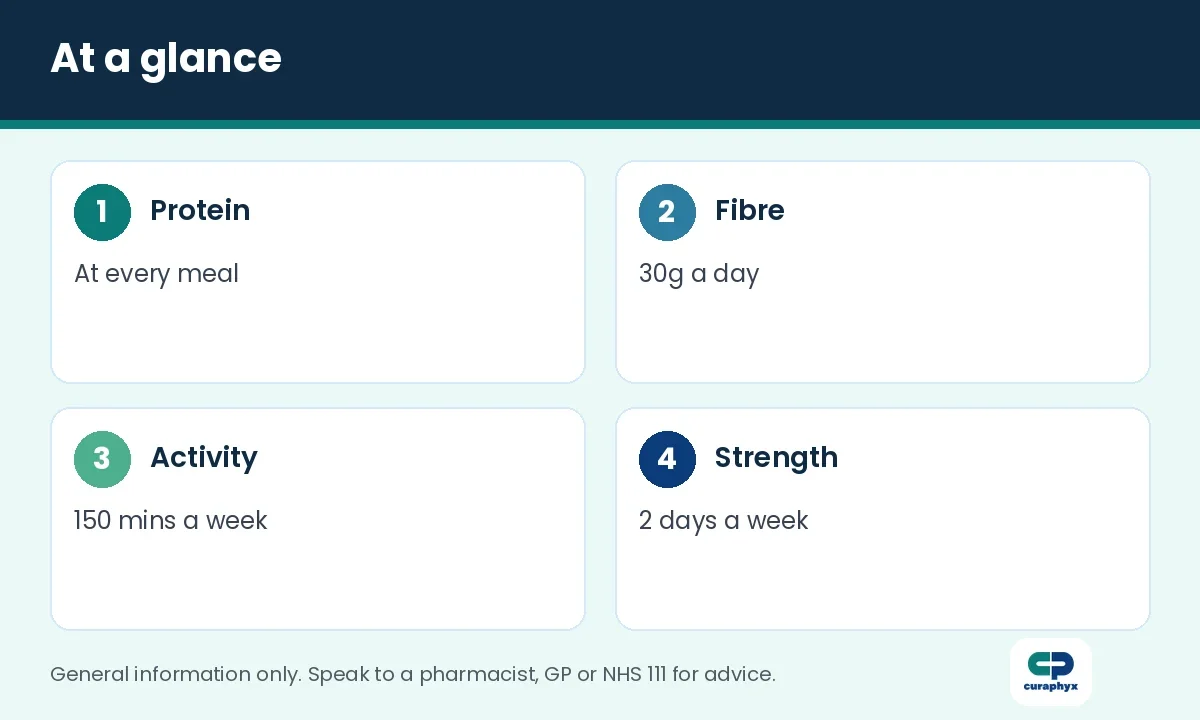
- Aim for 150 minutes of moderate activity a week, plus strength work on 2 days.
- Sleep, stress and alcohol all affect appetite and weight.
- Habits you build now help you keep weight off if you stop treatment later.
Why Lifestyle Changes With Weight Loss Medication Matter
Weight loss medicines such as Wegovy and Mounjaro copy gut hormones that help you feel full. As a result, many people eat less without trying as hard. Still, the medicine doesn’t choose what you eat. It doesn’t build muscle or help you sleep either.
So, the trials that tested these medicines also gave people diet and activity advice. For example, in the STEP 1 trial, people on semaglutide 2.4mg lost an average of 14.9% of their body weight over 68 weeks. People on a placebo lost 2.4%. Both groups had the same lifestyle support. In other words, the results you read about come from medicine and lifestyle changes together.
NICE guidance on obesity also puts diet, activity and behaviour change at the centre of care. Medicines are an extra tool for some people, not a replacement.
What happens when treatment stops?
In the STEP 4 trial, people who switched from semaglutide to a placebo after 20 weeks regained some of the weight they had lost. Meanwhile, people who stayed on the medicine kept losing weight. This shows the medicine keeps working only while you take it. Indeed, that’s why the habits you build during treatment matter so much for the long term.
Eating Well: Lifestyle Changes With Weight Loss Medication
When your appetite drops, you may eat much less than before. That’s the aim. However, smaller meals need to do more work, so what you eat becomes more important.
Put protein first
Protein helps you feel full. It also helps protect your muscle while you lose weight. Try to include a source of protein at each meal. For example:
- eggs, fish, chicken or lean meat
- beans, lentils, chickpeas or tofu
- Greek yoghurt, milk or cottage cheese
If you can only manage a few mouthfuls, start with the protein part of your plate.
Fill up on fibre
Fibre keeps your gut working well. It can also help with constipation, a common side effect of these medicines. UK guidelines say adults should aim for 30g of fibre a day. Good sources include oats, wholegrain bread, beans, fruit and vegetables. Then, add fibre slowly and drink plenty of fluid with it.
Eat smaller, slower meals
Many people feel sick if they eat a large meal on these medicines. So, try these tips:
- Use a smaller plate.
- Eat slowly and stop when you feel full.
- Avoid rich, fatty or fried foods, which can make nausea worse.
- Don’t lie down straight after eating.
You can read more in our guide to hunger hormones and how they control appetite.
Drink enough fluid
The Eatwell Guide suggests 6 to 8 cups or glasses of fluid a day. Water, milk and sugar-free drinks all count. This matters more if you have sickness or diarrhoea, as you can lose fluid quickly. Also, cut down on sugary drinks, which add calories without filling you up.
Moving More: Lifestyle Changes With Weight Loss Medication
Physical activity helps you lose fat, keep muscle and feel better. In addition, it’s one of the best ways to keep weight off in the long run.
How much activity do you need?
The UK Chief Medical Officers advise adults to:
- be active every day in some way
- do at least 150 minutes of moderate activity a week, such as brisk walking or cycling
- or do 75 minutes of vigorous activity a week, such as running
- do strength exercises on at least 2 days a week
- cut down on long periods of sitting
If you’re new to exercise, start small. A 10-minute walk after meals is a good first step. Then, build up over a few weeks.
Why strength work matters
When you lose weight quickly, some of the loss can come from muscle. Strength work helps you hold on to it. You don’t need a gym. For example, try squats, wall press-ups, carrying shopping bags or using resistance bands. Our guide to exercise and your weight loss treatment has a simple weekly plan.
Sleep, Stress and Lifestyle Changes With Weight Loss Medication
Sleep and stress are easy to forget. However, both affect hunger.
**Get enough sleep.** Poor sleep can make you feel hungrier and crave sugary foods the next day. Try to:
- go to bed and wake up at the same time each day
- keep your bedroom dark, cool and quiet
- avoid screens for an hour before bed
- cut down on caffeine after lunch
**Manage stress.** Stress can lead to comfort eating and poor sleep. Over time, it may make weight loss harder. Simple steps such as regular exercise, time outdoors and talking to people you trust can help. Find out more in our guide to stress and weight gain.
Some people also notice they eat for comfort rather than hunger. If this sounds like you, read our guide to emotional eating and how to manage it.
Alcohol: Lifestyle Changes With Weight Loss Medication
Alcohol contains a lot of calories. It can also lower your willpower around food. In addition, alcohol may make side effects such as nausea worse, and heavy drinking raises the risk of pancreatitis.
UK guidance says not to regularly drink more than 14 units a week, spread over 3 or more days. Many people on weight loss medicines find they want less alcohol anyway. If you drink, have some drink-free days each week.
Mindset: Lifestyle Changes With Weight Loss Medication
Weight loss isn’t only physical. It can change how you feel about food, your body and yourself.
Set realistic goals
Weight loss is rarely a straight line. Most people lose weight faster in the first months, then more slowly. A plateau is normal. Instead of only watching the scales, track other wins, such as:
- clothes fitting better
- more energy
- walking further without getting out of breath
- better blood pressure or blood sugar results
Look after your mental health
Some people feel great as they lose weight. Others find it harder than expected. Our guide to the psychological effects of weight loss explains what to expect. If you feel low for more than 2 weeks, speak to your GP. Also, you can refer yourself to NHS Talking Therapies in England.
Lifestyle Changes With Weight Loss Medication: Side Effects
The most common side effects of these medicines affect the gut. They include feeling sick, diarrhoea, constipation and indigestion. Simple changes can help:
| Side effect | What may help |
|---|---|
| Feeling sick | Eat small meals slowly. Avoid fatty foods. Sip cold water. |
| Constipation | Add fibre slowly. Drink more fluid. Stay active. |
| Diarrhoea | Drink plenty of fluid. Avoid greasy foods. |
| Indigestion | Don’t lie down after meals. Eat smaller portions. |
Get urgent medical help if you have severe stomach pain that doesn’t go away, as this can be a sign of pancreatitis. Also, speak to your prescriber if side effects are severe or don’t settle.
Your Gut and Metabolism
Your gut bacteria may play a part in weight. Research in this area is still at an early stage. Even so, a diet rich in fibre and plants is good for your gut either way. You can read more in our guide to gut health and weight loss.
People also ask whether weight loss slows their metabolism. In short, your body burns a little less energy as you get lighter. Strength work and enough protein can help. Our guide to metabolism and weight loss explains this in more detail.
Lifestyle Changes With Weight Loss Medication: A Weekly Checklist
Use this simple checklist to keep on track:
- **Meals:** protein at every meal and 30g of fibre a day.
- **Fluid:** 6 to 8 drinks a day.
- **Activity:** 150 minutes a week, plus strength work on 2 days.
- **Sleep:** a regular bedtime and wake time.
- **Alcohol:** no more than 14 units, with drink-free days.
- **Check-ins:** keep your review appointments and report side effects.
Small changes you can keep up are better for you than big changes you can’t.
Learn More About Lifestyle Changes With Weight Loss Medication
If you’d like to understand the medicines themselves, read our guides to what Wegovy is and how it works, how Mounjaro works and GLP-1 medicines for weight loss. For an overview of the options, see our guide to weight loss medication in the UK.
Frequently Asked Questions
Do I need to diet while taking Wegovy or Mounjaro?
Yes. Both medicines have UK licences for use alongside a reduced-calorie diet and more physical activity. You don’t need a strict plan. Instead, focus on smaller portions, more protein and fibre, and fewer sugary and fatty foods.
Can I exercise on weight loss injections?
Yes, and it’s encouraged. Start gently if you’re new to exercise. Also, drink plenty of fluid and eat something before you exercise if you feel light-headed.
Will I put weight back on if I stop?
Many people regain some weight after stopping. That’s what the STEP 4 trial found. Therefore, healthy habits built during treatment give you the best chance of keeping weight off.
How fast should I lose weight?
It varies from person to person. Your prescriber will review your progress at set points. If you’re losing weight very quickly or feel unwell, tell them.
Summary
Weight loss medicines work best alongside healthy habits. So, focus on protein and fibre, drink enough fluid and aim for 150 minutes of activity a week, plus strength work. Sleep, stress and alcohol matter too. These lifestyle changes with weight loss medication help you get better results now and keep weight off later.
About CuraPhyx Pharmacy
CuraPhyx Pharmacy is a UK pharmacy. A qualified pharmacist or prescriber reviews every request for a prescription medicine and decides whether it’s suitable. You can read more on our weight loss page. If you have questions, you can email info@curaphyx.co.uk.
Sources and Further Reading
We checked this article against the following sources in October 2026:
- FlexTouch semaglutide pen: summary of product characteristics (updated September 2026) (emc)
- Mounjaro KwikPen: summary of product characteristics (emc)
- Wilding JPH et al. Once-weekly semaglutide in adults with overweight or obesity (STEP 1). N Engl J Med, 2021
- Rubino D et al. Continued weekly semaglutide vs placebo on weight loss maintenance (STEP 4). JAMA, 2021
- Overweight and obesity management (NICE NG246)
- Semaglutide for managing overweight and obesity (NICE TA875)
- Physical activity guidelines (UK Chief Medical Officers)
- Physical activity guidelines for adults (NHS)
- Strength exercises (NHS)
- How to get more fibre into your diet (NHS)
- The Eatwell Guide (NHS)
- Water, drinks and hydration (NHS)
- Calculating alcohol units (NHS)
- How to get to sleep (NHS)
- Tips to reduce stress (NHS)
- NHS Talking Therapies (NHS)
- Acute pancreatitis (NHS)
This article is for general information only. It doesn’t replace advice from your GP, pharmacist or prescriber. Weight loss medicines are prescription-only medicines, so a prescriber must decide whether one is suitable for you. Speak to your GP before making big changes to your diet or exercise if you have a long-term health condition. Last reviewed: October 2026.