When do you need antibiotics? It’s a common question, and the answer is: less often than many people think. Antibiotics treat some bacterial infections, but they don’t work for viruses such as colds, flu and most coughs. Using them when they aren’t needed can cause side effects and makes antibiotic resistance worse. This guide explains when antibiotics help, when they don’t and what to do instead.
Key takeaways
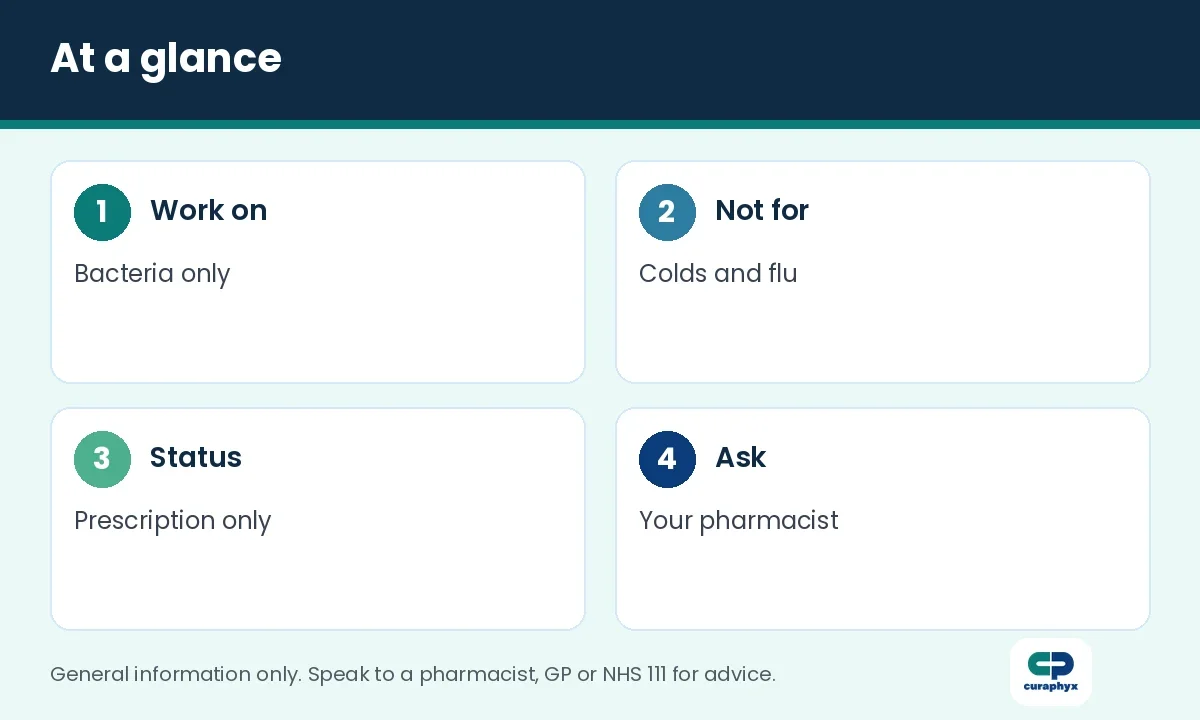
- Antibiotics only work against bacteria. They don’t treat viral infections like colds and flu.
- Many mild bacterial infections get better on their own.
- The NHS no longer routinely uses antibiotics for most chest infections, ear infections in children or sore throats.
- Antibiotics are prescription-only. A prescriber, or a Pharmacy First pharmacist, decides whether you need one.
- Using antibiotics only when needed helps keep them working for the future.
What Are Antibiotics?
Antibiotics are medicines that treat or prevent some types of bacterial infection. They work by killing bacteria or stopping them from spreading.
However, they don’t work for everything. In particular, they have no effect on viruses. Most coughs, colds, sore throats and flu are caused by viruses. So, antibiotics won’t help you get better from these.
When Do You Need Antibiotics?
The NHS says antibiotics may be used for bacterial infections that:
- are unlikely to clear up without antibiotics
- could take too long to clear without treatment
- carry a risk of more serious complications
- could spread to other people
Examples include:
| Situation | Example |
|---|---|
| Unlikely to clear on its own | Some cases of acne |
| Could spread to others | Impetigo, chlamydia |
| Antibiotics speed up recovery | Kidney infection |
| Risk of serious complications | Cellulitis, pneumonia |
People at higher risk
Antibiotics may also be advised for people who are more vulnerable to infection. According to the NHS, this can include:
- anyone aged over 75
- people with heart failure
- those who take insulin for diabetes
- people with a weakened immune system, for example during chemotherapy
Antibiotics to prevent infection
Sometimes, antibiotics are given to prevent an infection rather than treat one. This is called antibiotic prophylaxis. For example, it may be used before some types of surgery or after a bite that could become infected.
When You Probably Don’t Need Antibiotics
Many common infections get better on their own, usually within a few days to a few weeks. The NHS no longer routinely uses antibiotics to treat:
- most chest infections
- ear infections in children
- sore throats
The reasons are:
- many infections are caused by viruses, so antibiotics won’t work
- antibiotics often don’t speed up recovery, but they can still cause side effects
- the more antibiotics are used for minor illnesses, the less well they’ll work for serious ones
How long common infections last
Knowing how long symptoms usually last can help you decide when to seek help. The NHS gives these typical times:
Symptoms lasting this long are normal. Still, see a GP or pharmacist if you’re getting worse, or not getting better after these times.
| Infection | Usual length |
|---|---|
| Sore throat | About 1 week |
| Common cold | About 1 to 2 weeks |
| Bronchitis | About 3 weeks |
| Cough | Up to 3 to 4 weeks |
| Sinusitis | Up to 4 weeks |
When Do You Need Antibiotics? Getting the Right Advice
If you’re not sure whether you need antibiotics, a pharmacist is a good first step. Pharmacists can give advice on coughs, colds, sore throats and ear infections. They can also suggest over-the-counter treatments to ease symptoms.
NHS Pharmacy First
In England, the NHS Pharmacy First service lets pharmacists offer prescription medicine for some conditions, without a GP appointment. According to the NHS, these are:
- impetigo (age 1 and over)
- infected insect bites (age 1 and over)
- earache (age 1 to 17)
- sore throat (age 5 and over)
- sinusitis (age 12 and over)
- urinary tract infections (women aged 16 to 64)
- shingles (age 18 and over)
The pharmacist will assess you and offer advice, treatment or a referral to a GP. Antibiotics are only given if they’re likely to help.
Back-up prescriptions
Sometimes, a prescriber may give you a “back-up” or “delayed” prescription. This means you only use it if your symptoms don’t improve, or get worse, after a set time. As a result, many people find they don’t need the antibiotic at all.
Why Antibiotic Resistance Matters When You Need Antibiotics
Antibiotic resistance happens when bacteria change so that antibiotics no longer work against them. Overuse of antibiotics has led to “superbugs”, such as MRSA, that are hard to treat.
The UK government’s action plan for 2024 to 2029 aims to reduce the need for antibiotics and use them more carefully. Indeed, the NHS and health organisations around the world are working to cut unnecessary use.
You can help by:
- only taking antibiotics when a prescriber says you need them
- never sharing antibiotics or using leftover ones
- taking them exactly as prescribed
- returning unused antibiotics to a pharmacy for safe disposal
How to Take Antibiotics Safely
If you’re prescribed antibiotics, take them as directed on the label or patient leaflet. Also, follow any advice from your prescriber or pharmacist.
If you miss a dose
In most cases, take the missed dose as soon as you remember. Then, carry on with your course as normal. However, if it’s nearly time for your next dose, skip the missed one. Don’t take a double dose to make up for it. Check your leaflet or ask a pharmacist if you’re unsure.
Side effects
Common side effects include diarrhoea and feeling sick. These are usually mild and pass once you finish the course.
Rarely, antibiotics can cause an allergic reaction, especially penicillins and cephalosporins. Call 999 or go to A&E if you have:
- a rash with swollen, blistered or peeling skin
- wheezing or tightness in your chest or throat
- trouble breathing or talking
- swelling of your mouth, face, lips, tongue or throat
You can report side effects to the MHRA through the Yellow Card scheme.
When Do You Need Antibiotics Urgently?
Some infections can become serious quickly. Call 999 or go to A&E if you or someone you care for has signs of sepsis, such as:
- acting confused, slurred speech or not making sense
- blue, grey, pale or blotchy skin, lips or tongue
- a rash that doesn’t fade when you roll a glass over it
- difficulty breathing or breathing very fast
Also, call NHS 111 or see a GP urgently if you feel very unwell, have a high temperature that won’t go down, or have chest pain or shortness of breath.
Related Guides
For more on specific infections, see our guides to chest infection treatment, how doxycycline works and skin infection treatment.
When Do You Need Antibiotics? FAQs
Will antibiotics help my cold?
No. Colds are caused by viruses, so antibiotics won’t help. Rest, fluids and painkillers such as paracetamol can ease your symptoms.
Can I stop antibiotics when I feel better?
Take your antibiotics as your prescriber advises. Some courses are short. Don’t stop early unless your prescriber tells you to.
Is green mucus a sign I need antibiotics?
Not on its own. Green or yellow mucus is common with viral infections too. Instead, it’s how long you’ve been unwell and how severe your symptoms are that matter.
Can a pharmacist give me antibiotics?
Under NHS Pharmacy First in England, pharmacists can supply antibiotics for some conditions when they’re needed. Otherwise, you’ll need a prescription.
Summary: When Do You Need Antibiotics?
Antibiotics only work against bacteria. Many common infections, such as colds, most coughs and sore throats, get better on their own. So, you often don’t need antibiotics. A prescriber or Pharmacy First pharmacist will decide if you do. Using them only when needed helps keep them working.
Why Choose CuraPhyx Pharmacy?
CuraPhyx Pharmacy is a UK pharmacy built around safe, professional care. If you’re thinking about antibiotics, this is what you can expect from us:
- First, a qualified pharmacist prescriber reviews every request for a prescription medicine.
- We check your answers, medical history and other medicines carefully before making any decision.
- Medicines only leave the pharmacy after clinical approval. If treatment isn’t right for you, we’ll explain why and won’t supply it.
- We send approved orders across the UK in discreet packaging.
- Our team is also happy to help with questions at info@curaphyx.co.uk.
You can read more about our infections services before you decide whether it’s right for you.
Sources and Further Reading
We checked this article against the following sources in October 2026:
- Antibiotics (NHS)
- Uses of antibiotics (NHS)
- Antibiotic resistance (NHS)
- Side effects of antibiotics (NHS)
- Antimicrobial stewardship: systems and processes (NICE NG15)
- Cough (acute): antimicrobial prescribing (NICE NG120)
- Sinusitis (acute): antimicrobial prescribing (NICE NG79)
- How pharmacies can help (NHS)
- Pharmacy First (NHS England)
- UK 5-year action plan for antimicrobial resistance 2024 to 2029 (GOV.UK)
- ESPAUR report: antimicrobial use and resistance in England (UKHSA)
- Sepsis (NHS)
- Yellow Card scheme: report a side effect (MHRA)
This article is for general information only. It doesn’t replace advice from your GP, pharmacist or prescriber. Antibiotics are prescription-only medicines. A prescriber, or a pharmacist working under the NHS Pharmacy First service, must decide whether you need one. Last reviewed: October 2026.