A sore, scratchy throat is one of the most common reasons people speak to a pharmacist. Most throat infections are caused by viruses and clear up on their own within about a week, but knowing which throat infection treatment actually helps, and when a sore throat needs medical attention, can make recovery easier and safer. This guide from CuraPhyx Pharmacy explains the causes, symptoms, diagnosis and treatment options in plain language, based on NHS and NICE guidance.
Key takeaways
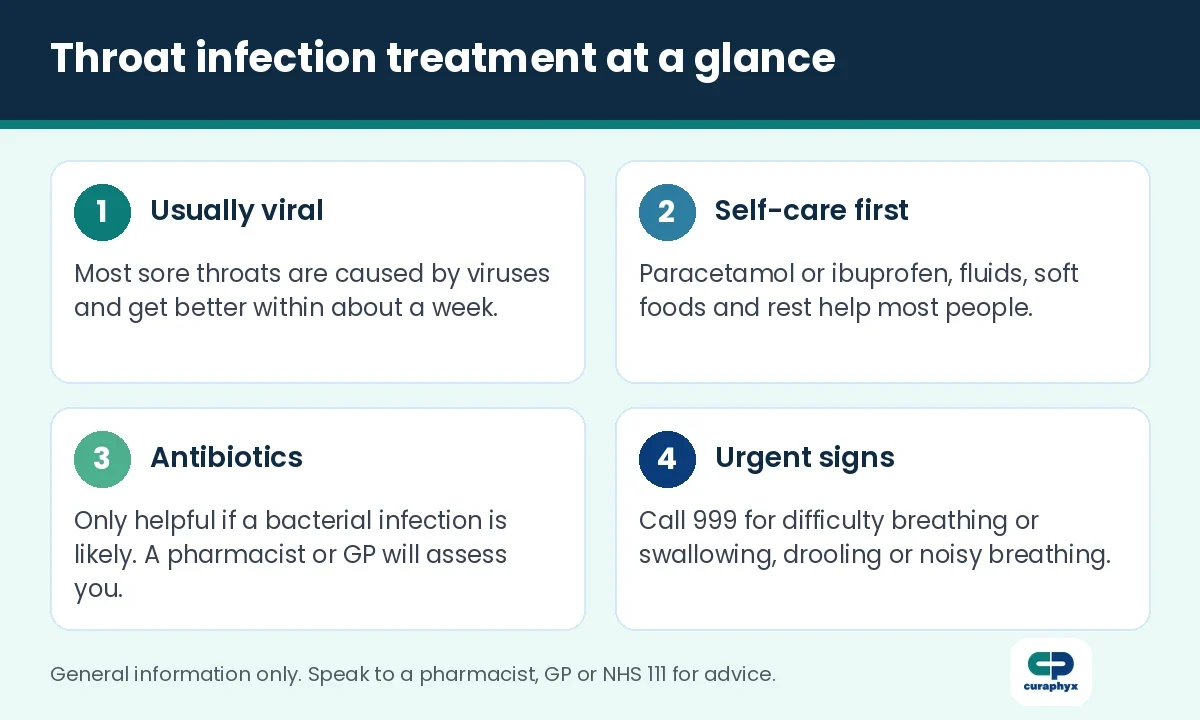
- Most throat infections are viral and get better within about a week without antibiotics.
- Paracetamol or ibuprofen, plenty of fluids and rest are the mainstay of treatment.
- Medicated lozenges and sprays may ease pain slightly, but they don’t cure the infection.
- Antibiotics only help when a bacterial infection is likely. A pharmacist or GP will assess this.
- Call 999 if someone has difficulty breathing or swallowing, is drooling or is making a high-pitched sound when breathing.
What Is a Throat Infection?
A throat infection happens when viruses or bacteria cause inflammation in the throat, leading to pain, swelling and irritation. Doctors often use more specific names depending on which part of the throat is affected:
- Pharyngitis: inflammation of the pharynx, the area at the back of the throat
- Tonsillitis: infection of the tonsils, the two pads of tissue at the back of the mouth
- Laryngitis: inflammation of the voice box (larynx), which often causes a hoarse or lost voice
- Strep throat: a throat infection caused by group A streptococcus bacteria
A sore throat can also be part of other illnesses, such as a cold, flu, COVID-19, glandular fever or scarlet fever.
What Causes a Throat Infection?
Viral causes
Viruses cause the large majority of sore throats. Common culprits include the viruses behind colds and flu. Glandular fever, caused by the Epstein-Barr virus, can cause a particularly painful sore throat with swollen glands and tiredness that may last longer than a typical cold. Antibiotics don’t work against any of these viruses.
Bacterial causes
Less often, bacteria are responsible. The most common is group A streptococcus (strep A), which causes strep throat and some cases of tonsillitis. Strep A can also cause scarlet fever, which is more common in children and usually comes with a rough, sandpaper-like rash.
Other causes of a sore throat
Not every sore throat is an infection. Irritation can also come from:
- smoking or being around smoke
- dry or heated indoor air
- acid reflux, where stomach acid irritates the throat
- straining your voice, for example shouting or singing
- allergies such as hay fever, which can cause mucus to drip down the back of the throat
How throat infections spread
The viruses and bacteria that cause throat infections spread through droplets from coughs and sneezes, close contact and touching contaminated surfaces, then your mouth or nose.
Symptoms That May Need Throat Infection Treatment
According to the NHS, common symptoms of a sore throat include:
- a painful throat, especially when swallowing
- a dry, scratchy throat
- redness at the back of the mouth
- bad breath
- a mild cough
- swollen glands in the neck
Depending on the cause, you may also notice a high temperature, aches, tiredness, a hoarse voice or red, swollen tonsils with white spots. With tonsillitis, the NHS says you may also have a headache or earache, or feel sick or be sick.
Symptoms in children
Children usually have similar symptoms, but they may also have a high temperature and seem less active than usual. Tonsillitis is a common childhood illness, although teenagers and adults can get it too. Young children may not be able to tell you their throat hurts, so watch for them going off food or drink, being unusually irritable or drooling.
Is it viral or bacterial?
It’s not possible to tell for certain from symptoms alone. As a general guide, a cough, runny nose or hoarse voice point towards a virus. A high temperature, pus on the tonsils, very swollen tonsils and no cough make a bacterial infection a little more likely. This is why a pharmacist or GP will ask about your symptoms rather than offering antibiotics straight away.
How Is a Throat Infection Diagnosed Before Treatment?
Most throat infections are diagnosed by a pharmacist, nurse or GP based on your symptoms and a quick examination. They may look at the back of your throat, check your temperature and feel for swollen glands in your neck.
Healthcare professionals in the UK often use a scoring tool called FeverPAIN to estimate how likely a bacterial infection is. It gives one point for each of the following:
- Fever in the past 24 hours
- Purulence (pus on the tonsils)
- Attending quickly, within 3 days of symptoms starting
- severely Inflamed tonsils
- No cough or cold symptoms
A higher score means antibiotics are more likely to help. Another tool, the Centor score, works in a similar way. NICE does not recommend routine rapid strep tests for sore throats, and throat swabs aren’t usually needed. A blood test may be offered if glandular fever is suspected.
Throat Infection Treatment Options
Throat infection treatment at home
For most people, self-care is all that’s needed while the body fights off the infection. The NHS recommends that you:
- drink plenty of water to stay hydrated
- eat cool or soft foods that are easy to swallow
- gargle with warm, salty water (adults only, as children shouldn’t try this)
- suck ice cubes, ice lollies or hard sweets (don’t give young children anything small and hard because of the choking risk)
- avoid smoking and smoky places
- get plenty of rest
To make a salt-water gargle, dissolve half a teaspoon of salt in a glass of warm water, gargle, then spit it out. Don’t swallow it.
Over-the-counter throat infection treatments
A pharmacist can recommend medicines to ease pain and discomfort. These are available without a prescription:
- Paracetamol: helps with pain and high temperature, and suits most people, including during pregnancy
- Ibuprofen: an anti-inflammatory painkiller that can help with pain and swelling, though it isn’t suitable for everyone
- Medicated lozenges: these may contain a local anaesthetic, an antiseptic or an anti-inflammatory such as flurbiprofen. NICE notes they may only reduce pain by a small amount
- Throat sprays: anaesthetic or anti-inflammatory sprays can numb or soothe the throat for a short time, although there’s little evidence for anaesthetic sprays used on their own
Always follow the dose on the pack, and check the ingredients of combination cold and flu products so you don’t take paracetamol from more than one source. You can browse sore throat remedies and pain relief at CuraPhyx Pharmacy, and ask a pharmacist if you’re unsure which product suits you.
Antibiotic throat infection treatment
Antibiotics don’t usually relieve symptoms or speed up recovery from a sore throat. NICE guidance notes that, even when they are used, antibiotics shorten symptoms by only around 16 hours on average, and most people feel better within a week with or without them. Taking antibiotics when they aren’t needed can cause side effects such as diarrhoea and nausea, and adds to antibiotic resistance.
Depending on how likely a bacterial infection is, a prescriber may advise:
- no antibiotic, with self-care advice
- a back-up prescription, to use only if symptoms don’t start to improve within 3 to 5 days or get worse
- an immediate antibiotic, if a bacterial infection is very likely, you’re very unwell or you’re at higher risk of complications
When an antibiotic is needed, the usual first choice in the UK is phenoxymethylpenicillin (penicillin V), taken for 5 to 10 days. For people allergic to penicillin, clarithromycin is usually offered instead, or erythromycin during pregnancy, normally for 5 days. Your prescriber will choose the dose based on your age and circumstances. Always take antibiotics exactly as prescribed and finish the course unless you’re told otherwise.
Throat infection treatment through NHS Pharmacy First
In England, many community pharmacies can assess sore throats in adults and children aged 5 and over through the NHS Pharmacy First service. A pharmacist can give the same antibiotic treatment as a GP if it’s needed, or direct you to other medical help.
Possible Complications
Complications are uncommon, but it helps to know what to look out for. They can include:
- Quinsy (a peritonsillar abscess): a collection of pus beside a tonsil, causing severe pain on one side, difficulty opening the mouth and a muffled voice. It needs urgent treatment
- Ear infections or sinusitis, where the infection spreads nearby
- Invasive group A strep: very rarely, strep A bacteria can cause serious illness. Seek urgent help if someone becomes very unwell, very drowsy or confused, or has signs of sepsis
Cautions With Throat Infection Treatment
- Pregnancy and breastfeeding: paracetamol is usually the first choice. Speak to a pharmacist before using ibuprofen, medicated lozenges or sprays.
- Children: check the age guidance on the pack, use children’s formulations and never give aspirin to under-16s.
- Ibuprofen: ask a pharmacist or GP first if you have asthma, a history of stomach ulcers, heart, kidney or liver problems, or take blood thinners.
- Other medicines: tell the pharmacist about any medicines you already take so they can check for interactions.
When to See a Pharmacist, GP or Get Urgent Help
See a pharmacist if
- you need advice or treatment for a sore throat
- your child is aged 5 or over and needs help for a sore throat
See a GP if
- a child under 5 needs help for a sore throat
- your sore throat, or your child’s, doesn’t improve after a week
- you often get sore throats
- you have a sore throat with a lump in your mouth or neck, or a mouth ulcer that lasts more than 3 weeks
Get an urgent GP appointment or call NHS 111 if
- you’re worried about your symptoms
- your temperature is very high, or you feel hot, cold or shivery
- there are signs of dehydration, such as peeing less than usual or dark, strong-smelling pee
- you have a weakened immune system, for example because of diabetes or chemotherapy
Call 999 or go to A&E if you or your child
- have difficulty breathing or can’t swallow
- are drooling, which can be a sign of being unable to swallow
- are making a high-pitched sound when breathing (stridor)
- have severe symptoms that are getting worse quickly
How to Prevent Throat Infections
You can’t avoid every sore throat, but these steps lower the risk of catching or spreading one:
- wash your hands often with soap and water, especially before eating
- catch coughs and sneezes in a tissue, bin it and wash your hands
- don’t share cups, cutlery or toothbrushes
- try to stay at home and avoid close contact with others if you have a high temperature or feel unwell
- stop smoking. The stop smoking range at CuraPhyx Pharmacy can support you
- get a flu vaccine if you’re eligible
Throat Infection Treatment FAQs
How long does a throat infection last?
Most sore throats get better within a week. Glandular fever can cause symptoms that last longer. If your sore throat hasn’t improved after a week, see a GP.
Is a throat infection contagious?
Yes. Viral and bacterial throat infections spread through coughs, sneezes and close contact. If you’re prescribed antibiotics for a bacterial infection, ask your prescriber when you’re no longer considered infectious.
Do I need antibiotics for tonsillitis?
Not usually. Tonsillitis is most often caused by a virus and gets better on its own. A pharmacist or GP may recommend antibiotics if a bacterial infection is likely or you’re very unwell.
What’s the difference between a sore throat and strep throat?
“Sore throat” describes the symptom, while strep throat is one specific cause: an infection with group A streptococcus bacteria. Strep throat is less common than viral sore throats and may need antibiotics.
Can children use lozenges and sprays as throat infection treatment?
Some products are suitable for children and others aren’t. Always check the age guidance on the pack, avoid hard lozenges for young children because of the choking risk, and ask a pharmacist if you’re unsure.
Can I go to work or school with a sore throat?
If you have a high temperature or feel unwell, try to stay at home until you feel better and no longer have a temperature. If you only have mild symptoms, washing your hands regularly and covering coughs and sneezes helps protect others.
Throat Infection Treatment: Summary
Most throat infections are caused by viruses and settle within a week with simple self-care: pain relief, fluids and rest. Lozenges and sprays may ease discomfort, but antibiotics only help when a bacterial infection is likely. Know the red flags, and get medical help quickly if breathing or swallowing becomes difficult.
How CuraPhyx Pharmacy Can Help With Throat Infection Treatment
CuraPhyx Pharmacy is a UK pharmacy. You can explore our sore throat and cold and flu ranges to help you feel more comfortable while you recover. If you have a question about which product is right for you, email our team at info@curaphyx.co.uk or use our contact page.
Sources and Further Reading
This article was written with reference to the following UK sources and checked against them in October 2026:
- Sore throat (NHS)
- Tonsillitis (NHS)
- Strep A (NHS)
- Laryngitis (NHS)
- Glandular fever (NHS)
- Scarlet fever (NHS)
- NICE NG84: Sore throat (acute): antimicrobial prescribing
- BNF: Phenoxymethylpenicillin
- Penicillin V (phenoxymethylpenicillin) (NHS)
- NHS England: Pharmacy First
This article is for general information only and doesn’t replace advice from a pharmacist, GP or other healthcare professional. Always read the patient information leaflet that comes with your medicine. Last reviewed: October 2026.