There’s no single official **Mounjaro diet**. Still, what you eat makes a big difference to your results and to how you feel. Mounjaro (tirzepatide) reduces your appetite, so every meal needs to work harder for your health. The right foods can help you lose fat rather than muscle, ease side effects and build habits that last. This guide explains what to eat, what to limit and how to plan simple, balanced meals, based on NHS advice.
Key takeaways
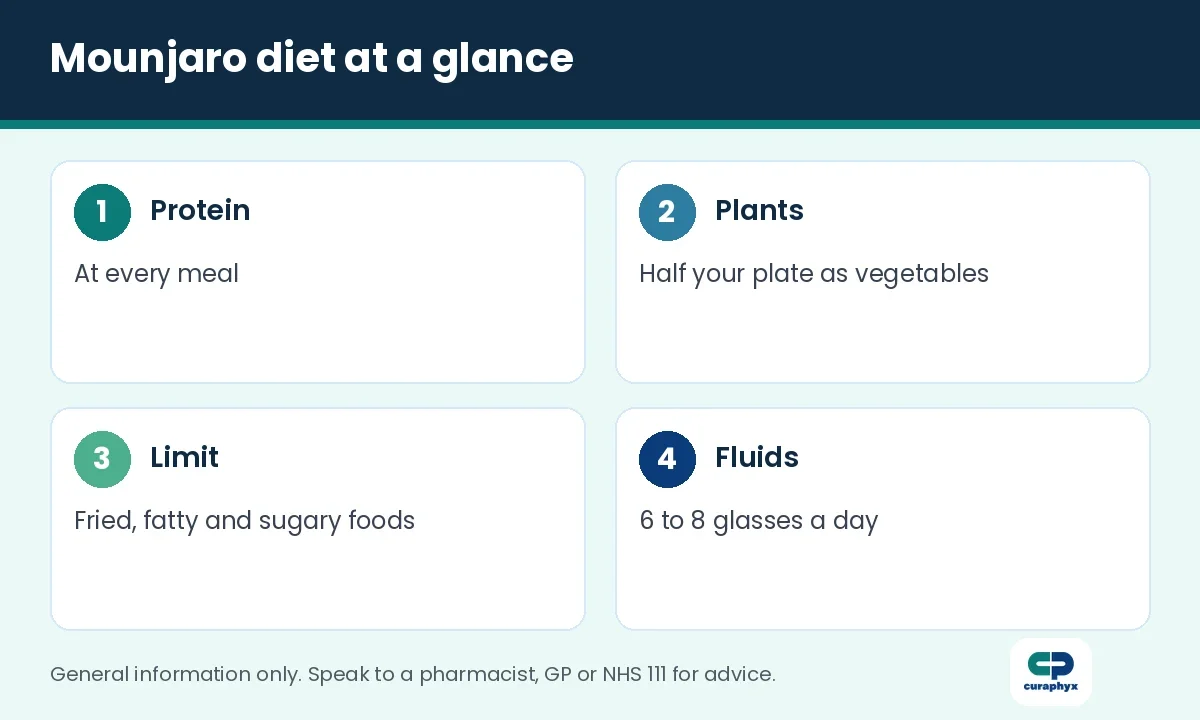
- A good Mounjaro diet is balanced, lower in calories and built around protein, vegetables, fruit and wholegrains.
- Eat smaller meals, eat slowly and stop as soon as you feel full.
- Include protein at every meal to help protect your muscles.
- Limit fatty, fried, spicy and very sugary foods, which can worsen nausea.
- Drink plenty of fluids, ideally six to eight glasses a day, and more if you’re unwell.
- Don’t eat too little. Very low intakes can cause tiredness, muscle loss and other problems.
What Is a Mounjaro Diet?
A Mounjaro diet isn’t a special plan. Instead, it’s a healthy, reduced-calorie way of eating that works alongside your medicine. The official product information says to use Mounjaro with a reduced-calorie diet and more physical activity.
The aim is to:
- eat enough nutrients, even though your appetite is smaller
- protect your muscle as you lose weight
- reduce stomach side effects such as nausea and constipation
- learn habits that help you keep weight off in the long term
The NHS Eatwell Guide is a good starting point. It shows how much of each food group makes up a balanced diet.
The Building Blocks of a Mounjaro Diet
Protein at every meal
Protein helps you feel full. It also helps protect your muscles while you lose weight. So, try to include a portion of protein at each meal.
Good sources include:
- eggs
- chicken, turkey and lean meat
- fish, including oily fish such as salmon and mackerel
- beans, lentils and chickpeas
- tofu and other soya foods
- Greek yoghurt, cottage cheese and milk
Vegetables and fruit
Vegetables and fruit are filling, low in calories and high in fibre and vitamins. Aim for at least five portions a day. A simple rule is to fill half your plate with vegetables or salad.
Wholegrains and fibre
Wholegrain foods, such as oats, brown rice, wholemeal bread and wholewheat pasta, release energy slowly. They also provide fibre, which helps prevent constipation. However, keep portions modest, because your appetite will be smaller.
Healthy fats in small amounts
Some fat is essential. Choose unsaturated fats, such as olive oil, rapeseed oil, nuts and seeds. Still, use them sparingly. Fatty foods can slow digestion further and make nausea worse on Mounjaro.
Foods to Limit on a Mounjaro Diet
Some foods are more likely to cause side effects or slow your progress. Try to limit:
- fried and greasy foods, such as chips and takeaways
- rich, creamy sauces
- very spicy foods, if they upset your stomach
- sugary snacks, cakes and biscuits
- sugary and fizzy drinks
- alcohol, which the NHS advises avoiding while using tirzepatide
You don’t need to ban these completely. But smaller portions, less often, will help you feel better. Our guide to drinking alcohol on tirzepatide explains more.
How to Eat on a Mounjaro Diet
How you eat matters as much as what you eat. These habits can make a real difference:
- **Eat smaller portions.** Try using a smaller plate.
- **Eat slowly.** It takes time for your brain to register fullness.
- **Stop when you’re full.** Overeating is more likely to cause nausea, bloating and vomiting.
- **Eat regularly.** Skipping meals can make you feel weak or dizzy.
- **Don’t lie down after eating.** Wait at least an hour to help prevent reflux.
- **Eat protein first.** This helps you get enough before you feel full.
A Sample Mounjaro Diet Day
This example shows how a balanced day could look. Portions will vary depending on your appetite and needs.
| Meal | Example | Why it helps |
|---|---|---|
| Breakfast | Porridge made with milk, topped with berries and a spoon of seeds | Fibre, protein and slow-release energy |
| Lunch | Wholemeal wrap with chicken or falafel, salad and hummus | Protein and vegetables in a small portion |
| Snack | Greek yoghurt or an apple with a few nuts | Keeps hunger steady between meals |
| Dinner | Baked salmon or tofu with roasted vegetables and a small portion of new potatoes | Protein, healthy fats and fibre |
| Drinks | Water, tea, coffee or sugar-free drinks throughout the day | Supports hydration |
If you have a very small appetite, try five or six mini meals instead of three larger ones.
Your Mounjaro Diet and Side Effects
Food choices can ease many common side effects. Here’s what can help.
Nausea
Choose plain, bland foods, such as toast, crackers or rice. Cold foods may be easier than hot ones. Ginger or peppermint tea can also help. Avoid fatty and strongly flavoured foods.
Constipation
Increase fibre gradually and drink more fluids. Prunes, kiwi fruit, oats and beans can help. Gentle activity, such as walking, also keeps things moving.
Diarrhoea
Drink plenty of fluids to replace what you lose. Limit greasy food, caffeine and alcohol. If it’s severe, a pharmacist can suggest oral rehydration sachets.
Reflux and indigestion
Eat smaller meals and avoid eating late in the evening. Also, cut back on fatty foods, chocolate, coffee and alcohol if they trigger symptoms.
For more on managing side effects, see our side effects guide.
Hydration on a Mounjaro Diet
When you eat less, you also get less fluid from food. In addition, vomiting and diarrhoea can cause you to lose fluid. So, staying hydrated is very important.
The NHS suggests six to eight glasses of fluid a day. Water, lower-fat milk and sugar-free drinks, including tea and coffee, all count. If you’re unwell, you may need more. Our dehydration guide explains the warning signs.
Don’t Eat Too Little on a Mounjaro Diet
Mounjaro can reduce your appetite a lot. Some people find they barely want to eat. However, eating too little can cause problems, such as:
- tiredness, weakness and dizziness
- muscle loss
- not getting enough vitamins and minerals
- a higher risk of gallstones with very rapid weight loss
So, even if you’re not hungry, try to eat regular, small meals that include protein. If you’re struggling to eat enough, talk to your prescriber.
Do you need supplements?
Most people can get what they need from a balanced diet. However, the NHS advises everyone to consider taking 10 micrograms of vitamin D a day during autumn and winter. If you’re eating very little, ask a pharmacist whether a general multivitamin might help.
Eating Out and Social Events
You can still enjoy meals out on Mounjaro. These tips can help:
- check the menu in advance and choose grilled, baked or steamed dishes
- ask for sauces and dressings on the side
- order a starter as a main, or share a dish
- stop eating when you feel full, even if there’s food left
Building Habits That Last
Mounjaro helps control your appetite while you take it. But the habits you build now will help you long after. So, use this time to learn about portion sizes, balanced meals and how to read food labels.
If your weight loss stalls, our guide to weight loss plateaus has practical tips. Combining your Mounjaro diet with regular activity is also important. Our guide to exercise while on treatment explains how to get started.
Frequently Asked Questions
What should I eat on a Mounjaro diet?
Focus on protein, vegetables, fruit and wholegrains, with small amounts of healthy fats. Eat smaller meals, slowly.
Is there a Mounjaro diet plan I should follow?
There’s no official plan. Instead, follow the NHS Eatwell Guide and adjust portions to your appetite. A healthcare professional can help you plan meals.
What foods should I avoid on Mounjaro?
Limit fried, greasy, very spicy and sugary foods, as well as fizzy drinks and alcohol. These can worsen side effects.
How many calories should I eat on Mounjaro?
It depends on your size, age and activity. On average, women need around 2,000 calories a day and men around 2,500 to maintain their weight. A modest reduction is usually enough. Avoid very low-calorie diets unless a professional supervises you.
Can I eat carbs on Mounjaro?
Yes. Choose wholegrain, high-fibre options, and keep portions sensible.
Summary
A healthy Mounjaro diet is simple. Build your meals around protein, vegetables, fruit and wholegrains, and limit fatty, fried and sugary foods. Eat smaller portions slowly, stop when you’re full and drink plenty of fluids. Most importantly, don’t eat too little, and talk to your prescriber if side effects make eating difficult.
Why Choose CuraPhyx Pharmacy?
CuraPhyx Pharmacy is a UK pharmacy built around safe, professional care. If you’re thinking about Mounjaro and want practical, expert support, this is what you can expect from us:
- First, a qualified pharmacist prescriber reviews every request for a prescription medicine.
- We check your answers, weight and medical history carefully before making any decision.
- Medicines only leave the pharmacy after clinical approval. If treatment isn’t right for you, we’ll explain why and won’t supply it.
- We send approved orders across the UK in discreet packaging.
- Our team is also happy to help with questions at info@curaphyx.co.uk.
You can find out more about how our weight loss service works, including the checks involved, before you decide whether it’s right for you.
Sources and Further Reading
We checked this article against the following sources in October 2026:
- The Eatwell Guide (NHS)
- Eating a balanced diet (NHS)
- Water, drinks and hydration (NHS)
- Vitamin D (NHS)
- Tirzepatide (Mounjaro) (NHS)
- Mounjaro KwikPen summary of product characteristics (emc)
- Constipation (NHS)
- Heartburn and acid reflux (NHS)
- Diarrhoea and vomiting (NHS)
- Managing your weight (NHS)
- Gallstones (NHS)
This article is for general information only. It doesn’t replace advice from your GP, pharmacist or prescriber. Mounjaro is a prescription-only medicine, so a prescriber must decide whether it’s suitable for you. Always read the patient information leaflet that comes with your medicine. Last reviewed: October 2026.