If you’re wondering **how to start losing weight**, you’re not alone. Many people know they want to change, but they aren’t sure where to begin. The good news is that you don’t need a perfect plan. Instead, small, steady changes to what you eat, how you move and how you sleep can add up to real results. This guide sets out a realistic, evidence-based plan based on NHS advice. It also explains when medical support, including weight loss medicines, might help.
Key takeaways
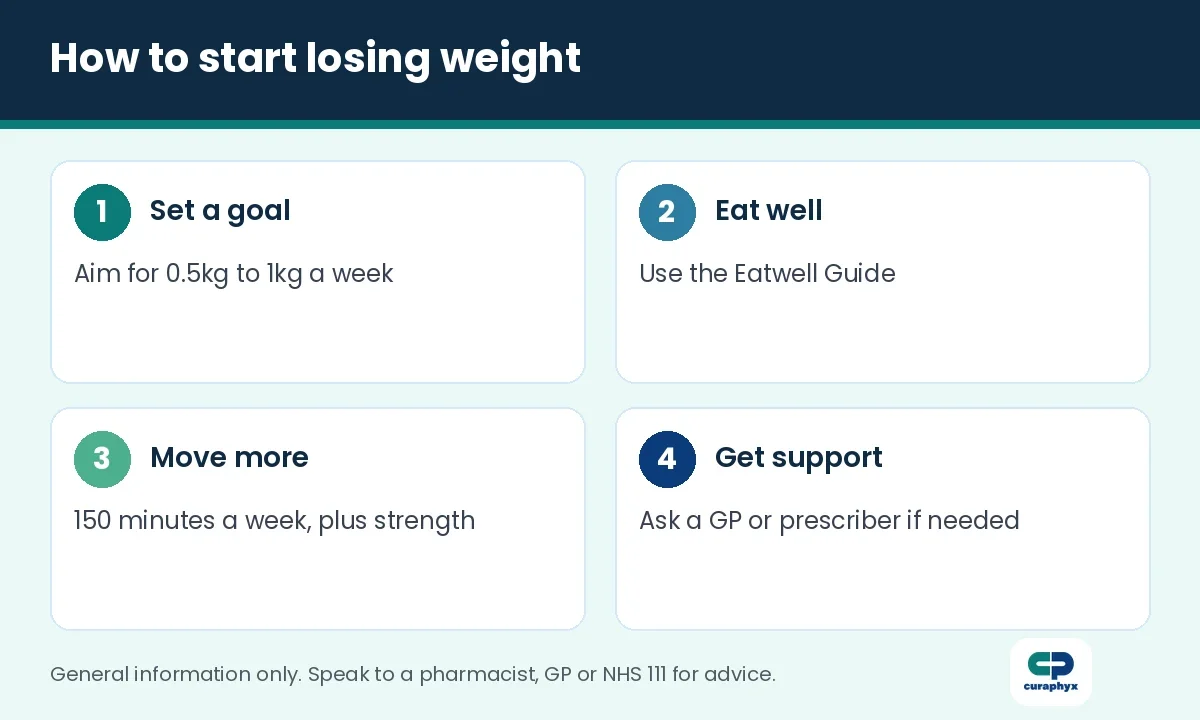
- Aim to lose 0.5kg to 1kg (1lb to 2lb) a week. Slow and steady loss is easier to keep off.
- On average, women use around 2,000 calories a day and men around 2,500.
- Losing just 5% of your body weight can improve your health.
- Build meals around vegetables, fruit, wholegrains and protein, and cut back on sugary and fatty foods.
- Being active, sleeping well and drinking less alcohol all make a difference.
- If lifestyle changes aren’t enough, a GP or prescriber can discuss other support.
How to Start Losing Weight: The Basics
Weight loss comes down to energy balance. When you eat and drink fewer calories than your body uses, it burns stored fat for fuel. Over time, that leads to weight loss.
So, how big should the gap be? The NHS suggests aiming to lose 0.5kg to 1kg a week. That may sound slow. However, steady weight loss is more likely to last than a crash diet.
Most people who start losing weight don’t need to count every calorie. Even so, it helps to know the averages. Women use around 2,000 calories a day and men around 2,500. Your needs depend on your age, size and how active you are.
Step 1: Check Where You Are Before You Start Losing Weight
Before you change anything, take stock. First, work out your body mass index (BMI) with the NHS BMI calculator. A BMI of 18.5 to 24.9 is in the healthy range for most adults. A BMI of 25 to 29.9 is overweight, and 30 or more is obesity.
BMI has limits, though. For example, it can’t tell muscle from fat. That’s why the NHS also suggests checking your waist-to-height ratio. Ideally, your waist should measure less than half your height.
Next, write down your starting weight and waist size. Then, set a realistic goal. For many people, losing 5% of their body weight is a great first target. For someone who weighs 100kg, that’s 5kg.
If you’re aged 40 to 74, you may also be eligible for a free NHS Health Check. It looks at your blood pressure, cholesterol and risk of conditions such as type 2 diabetes.
Step 2: Change What You Eat, One Step at a Time
You don’t need to cut out whole food groups. Instead, follow the Eatwell Guide, which shows how much of each food group makes up a healthy diet.
Here are simple changes that help:
- Fill half your plate with vegetables or salad.
- Choose wholegrain bread, pasta and rice, because fibre keeps you fuller for longer.
- Include protein at every meal, such as beans, lentils, fish, eggs or lean meat.
- Swap sugary drinks for water, sugar-free drinks or tea and coffee without sugar.
- Cut back on cakes, biscuits, crisps and takeaways.
- Check food labels and choose more green and amber options.
Portion size matters too. In fact, it’s easy to eat more than you need, even with healthy food. Try using a smaller plate. Also, eat slowly and stop when you feel comfortably full.
Plan ahead so you can start losing weight
Planning is one of the most useful habits when you start losing weight. For instance, write a weekly meal plan and shopping list. Then, keep healthy snacks such as fruit or plain yoghurt to hand. As a result, you’re less likely to grab something on the go.
Don’t skip meals
Skipping meals can backfire. When you get very hungry, you’re more likely to overeat later. Instead, aim for regular meals, including breakfast.
Step 3: Move More to Help You Start Losing Weight
Diet has the biggest effect on weight loss. Still, activity helps you burn extra calories, keeps muscles strong and boosts your mood.
UK guidelines say adults should aim for at least 150 minutes of moderate activity a week. Alternatively, you can do 75 minutes of vigorous activity. You should also do strength exercises on at least two days a week. If you want to lose weight, the NHS suggests building up to 45 to 60 minutes of activity a day.
That might sound a lot. But you can break it into short bursts. For example:
- a brisk 10-minute walk after each meal
- taking the stairs instead of the lift
- cycling or walking for short journeys
- gardening, housework or dancing
- bodyweight exercises such as squats and wall press-ups at home
If you haven’t been active for a while, start slowly and build up. Even gentle activity helps when you start losing weight, because every step counts. Free programmes such as Couch to 5K can help you get going.
Step 4: Look After Your Sleep, Stress and Drinking
Weight isn’t just about food and exercise. Other habits matter too.
Poor sleep can affect hunger hormones. As a result, you may crave sugary, high-calorie foods when you’re tired. So, aim for a regular bedtime and a calm routine before sleep.
Stress can also lead to comfort eating. When you feel the urge to snack, pause and ask whether you’re really hungry. A short walk or a chat with a friend can help.
Alcohol is high in calories, and it can weaken your willpower. The UK guidelines advise drinking no more than 14 units a week, spread over three or more days. Cutting down is one of the easiest ways to start losing weight.
Step 5: Track Your Progress and Stay Motivated
Keeping track helps you stay on course. For example, weigh yourself once a week, at the same time of day. Then, record your waist size every few weeks too.
Expect ups and downs. Your weight naturally changes from day to day because of fluid and food. So, look at the trend over several weeks rather than a single reading.
The free NHS Weight Loss Plan app offers a 12-week plan. It helps you set goals, count calories and track your activity. In addition, it’s useful to tell friends or family about your goals, because support makes a big difference.
If you have a slip, don’t give up. Instead, think about what triggered it and plan how to handle it next time.
How to Start Losing Weight Safely
Some approaches do more harm than good. Avoid very low-calorie diets unless a healthcare professional supervises you. Also, be wary of detox teas, fat-burning supplements and plans that promise rapid results.
Talk to your GP before you start if you:
- have diabetes, especially if you take insulin or a sulfonylurea
- have heart, kidney or liver disease
- are pregnant or breastfeeding
- have a history of an eating disorder
- take medicines that changes to your diet might affect
When to Consider Medical Support
Lifestyle changes are the foundation of any weight loss plan. However, for some people, they aren’t enough on their own. In that case, you may be able to get extra help.
For example, your GP may refer you to a local weight management service. The NHS Digital Weight Management Programme also offers a free 12-week online plan for some adults with obesity who have diabetes or high blood pressure.
Weight loss medicines can also help some people. These include weekly injections such as Mounjaro and Wegovy, newer daily tablets and orlistat capsules. They’re usually only suitable if your BMI is 30 or more, or 27 or more with a weight-related condition. A prescriber must also assess you first, because these medicines aren’t safe for everyone. Our guide to weight loss medicines in the UK compares the options.
Importantly, medicines only work alongside a healthier diet and more activity. So, the habits in this guide still matter.
Frequently Asked Questions
What is the best way to start losing weight?
The best way is the one you can keep up. In general, combine a balanced, lower-calorie diet with regular activity. Start with two or three small changes, and add more once they feel natural.
How much weight can I lose in a month?
If you follow NHS advice, you might lose around 2kg to 4kg in a month. You may lose more in the first week or two, partly because of fluid loss.
Should I cut out carbs to start losing weight?
No, you don’t need to cut out carbs to start losing weight. Wholegrain carbs provide energy and fibre. Instead, watch your portion sizes and choose less processed options.
How to start losing weight when you have no time?
Focus on quick wins. For instance, swap sugary drinks for water, walk during phone calls and prepare simple meals in batches.
When should I see a GP about my weight?
See a GP if you’re struggling to lose weight, if your weight is affecting your health or if you have a long-term condition. They can check your health and talk about your options.
Summary
Learning how to start losing weight is about building habits you can stick with. Begin by checking your BMI and setting a realistic goal. Then, make small changes to your diet, move more, sleep well and cut down on alcohol. Track your progress over weeks, not days. Finally, if lifestyle changes aren’t enough, ask a healthcare professional about extra support.
Why Choose CuraPhyx Pharmacy?
CuraPhyx Pharmacy is a UK pharmacy built around safe, professional care. If you’re thinking about medical support to help you start losing weight, this is what you can expect from us:
- First, a qualified pharmacist prescriber reviews every request for a prescription medicine.
- We check your answers, weight and medical history carefully before making any decision.
- Medicines only leave the pharmacy after clinical approval. If treatment isn’t right for you, we’ll explain why and won’t supply it.
- We send approved orders across the UK in discreet packaging.
- Our team is also happy to help with questions at info@curaphyx.co.uk.
You can find out more about how our weight loss service works, including the checks involved, before you decide whether it’s right for you.
Sources and Further Reading
We checked this article against the following sources in October 2026:
- Managing your weight (NHS)
- Overweight and obesity (NHS)
- How to lose weight (NHS Better Health)
- Calculate your body mass index (BMI) (NHS)
- The Eatwell Guide (NHS)
- Eating a balanced diet (NHS)
- Physical activity guidelines for adults (NHS)
- Strength exercises (NHS)
- Physical activity guidelines (UK Chief Medical Officers)
- Alcohol units (NHS)
- Sleep and tiredness (NHS)
- NHS Health Check (NHS)
- NHS Digital Weight Management Programme (NHS England)
- Overweight and obesity management (NICE NG246)
This article is for general information only. It doesn’t replace advice from your GP, pharmacist or prescriber. Weight loss medicines are prescription-only, apart from low-dose orlistat, so a prescriber must decide whether they’re suitable for you. Always read the patient information leaflet that comes with your medicine. Last reviewed: October 2026.