Mounjaro and Wegovy are two of the most talked-about weight loss injections in the UK. Both need a prescription. You use them alongside a lower-calorie diet and more exercise, and both can lead to a lot of weight loss. If you’re comparing Mounjaro vs Wegovy, this guide explains how each one works and how they compare in trials. It also covers side effects, safety and who can get them. It’s based on NHS, NICE and MHRA guidance.
Key takeaways
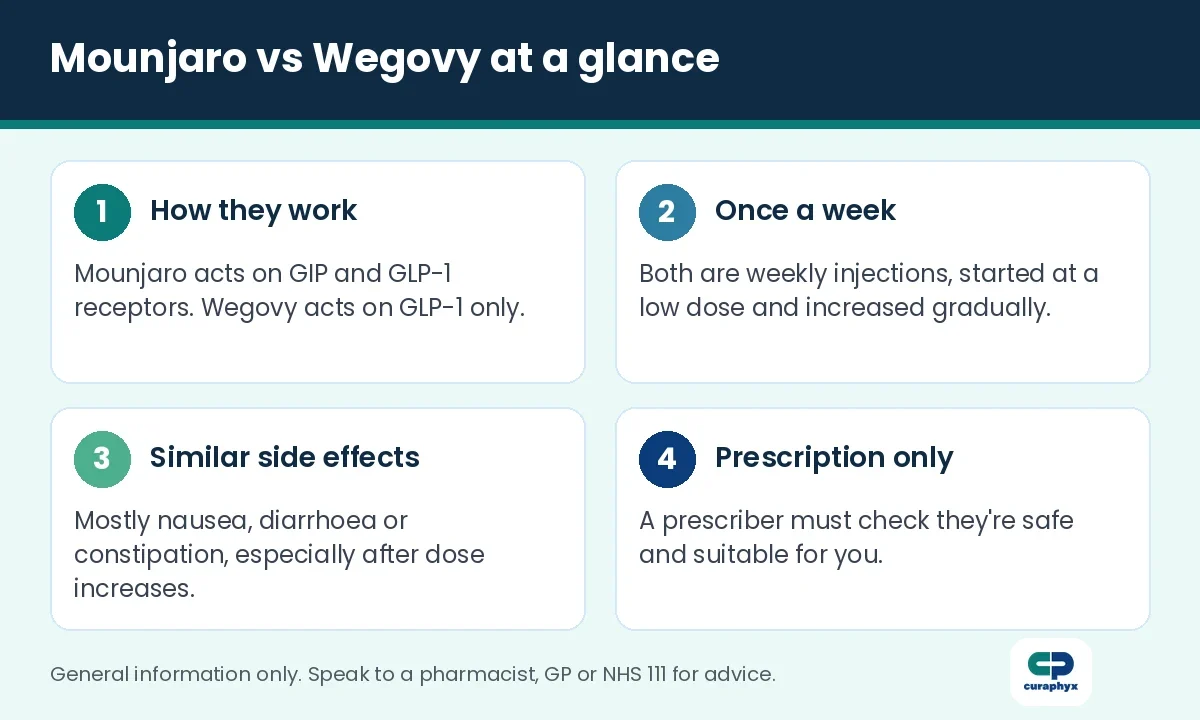
- Mounjaro (tirzepatide) acts on two gut hormone receptors, GIP and GLP-1. Wegovy (semaglutide) acts on GLP-1 only.
- Both are once-weekly injections, started at a low dose and increased gradually.
- In a 2025 head-to-head trial, people taking tirzepatide lost more weight on average than those taking semaglutide.
- Side effects are similar and mostly digestive, such as nausea, diarrhoea and constipation.
- Both need a prescription. A prescriber must check they’re safe and suitable for you.
What Are Weight Loss Injections?
Mounjaro and Wegovy copy natural gut hormones that your body releases after you eat. These hormones tell your brain you’re full. They also slow down how fast your stomach empties and help control blood sugar. As a result, you feel full sooner and for longer, so it’s easier to eat less.
Both come in a pre-filled pen. You inject yourself once a week, just under the skin of your tummy, thigh or upper arm.
Mounjaro vs Wegovy: who can use them?
In the UK, the licences for both cover weight management in adults with a body mass index (BMI) of:
- 30 or more, or
- 27 to 29.9 with at least one weight-related health condition, such as type 2 diabetes, high blood pressure, high cholesterol, obstructive sleep apnoea or heart disease
They’re designed to support healthy eating and regular activity, not replace them. Specialists can also use Wegovy in some adolescents aged 12 and over. Doctors may also offer it to some adults with obesity or overweight who’ve had a heart attack or stroke. The same applies to some people with peripheral arterial disease (poor blood flow to the legs).
Mounjaro (Tirzepatide) Explained
Mounjaro’s active ingredient is tirzepatide. It’s described as a dual agonist because it activates two hormone receptors:
- GLP-1 (glucagon-like peptide-1), which reduces appetite, slows stomach emptying and helps control blood sugar
- GIP, another gut hormone, which also helps control blood sugar and appetite
Mounjaro also treats type 2 diabetes. For weight management, treatment usually starts at 2.5mg once a week for 4 weeks. The dose then goes up in 2.5mg steps, no more often than every 4 weeks. The maintenance dose is 5mg, 10mg or 15mg, depending on how well you respond and cope with side effects.
Wegovy (Semaglutide) Explained
Wegovy’s active ingredient is semaglutide, a GLP-1 receptor agonist. Like Mounjaro, it reduces hunger, helps you feel full and slows stomach emptying.
Semaglutide is also the active ingredient in Ozempic, a type 2 diabetes medicine. Wegovy is the brand for weight management. Treatment usually starts at 0.25mg once a week. Every 4 weeks, the dose goes up: 0.5mg, then 1mg, then 1.7mg. The usual long-term dose is 2.4mg. Some adults with obesity may later move up to 7.2mg.
Mounjaro vs Wegovy: Key Differences
| Mounjaro | Wegovy | |
|---|---|---|
| Active ingredient | Tirzepatide | Semaglutide |
| How it works | Activates GIP and GLP-1 receptors | Activates GLP-1 receptors |
| How often | Once a week | Once a week |
| Starting dose | 2.5mg | 0.25mg |
| Usual maintenance dose | 5mg, 10mg or 15mg | 2.4mg (7.2mg for some adults) |
| Missed dose | Inject if 4 days or less late, otherwise skip | Inject if 5 days or less late, otherwise skip |
| Oral contraceptive pill | May be less effective. Extra contraception advised at certain times | No significant effect expected |
| Stop before planned pregnancy | At least 1 month before | At least 2 months before |
| NHS review rule (NICE) | Under 5% lost after 6 months on the top tolerated dose: decide whether to continue | Under 5% lost after 6 months: consider stopping. Up to 2 years |
You inject both medicines on the same day each week. You can change your injection day as long as it’s been at least 3 days since your last injection.
Mounjaro vs Wegovy: How Effective Are They?
In trials, both led to large weight loss when used with support for diet and exercise.
The first large head-to-head trial, SURMOUNT-5, appeared in the New England Journal of Medicine in 2025. It compared the highest tolerated doses of tirzepatide and semaglutide in 751 adults with obesity who didn’t have diabetes. After 72 weeks, average weight loss was 20.2% with tirzepatide and 13.7% with semaglutide. The manufacturer of tirzepatide funded the trial.
These are averages. Some people lose more weight and others lose less, and trial results don’t predict how any one person will respond. The right option depends on your health, your other medicines and how well you cope with side effects. It’s a choice to make with a prescriber.
Mounjaro vs Wegovy Side Effects
Most side effects affect the digestive system and are mild to moderate. They’re most likely in the first few weeks and after each dose increase, and often ease over time. According to the NHS, common side effects of both medicines include:
- feeling sick (nausea) or being sick (vomiting)
- constipation or diarrhoea
- stomach pain, indigestion or bloating
- feeling tired
- itchy or red skin where you inject
- hair loss
Tips for managing digestive side effects
- Eat smaller meals and stop eating when you start to feel full.
- Choose plainer foods and go easy on rich, fatty or very sugary meals.
- Drink plenty of fluids, especially if you’re being sick or have diarrhoea, to avoid dehydration.
- Include fibre-rich foods and stay active to help prevent constipation.
- Tell your prescriber if side effects don’t settle. They may suggest staying on your current dose for longer before increasing it.
Serious Side Effects: When to Get Help
Serious side effects are uncommon, but it’s important to know the warning signs:
- Acute pancreatitis: severe pain in your stomach or back that doesn’t go away, sometimes with being sick
- Gallbladder problems: gallstones or an inflamed gallbladder. Signs include severe tummy pain, a high temperature or yellow skin or eyes
- Dehydration: ongoing vomiting or diarrhoea can lead to dehydration, which can affect your kidneys
- Low blood sugar (hypoglycaemia): more likely if you also take insulin or other diabetes medicines. Signs include sweating, shaking, dizziness, a fast heartbeat and confusion
- Eye problems with semaglutide: worsening diabetic eye disease (retinopathy) in people with diabetes, and rarely sudden loss of vision, usually in one eye
Call NHS 111 if you think you might be having a serious side effect. Call 999 if you have signs of a serious allergic reaction. These include a swollen throat or tongue, a raised itchy rash or trouble breathing.
Do you feel dizzy or have vision problems? If so, don’t drive, ride a bike or use machines until these effects have gone. You can report suspected side effects through the MHRA Yellow Card scheme.
Mounjaro vs Wegovy: Important Safety Information
Pregnancy, breastfeeding and contraception
Don’t use Mounjaro or Wegovy if you’re pregnant, trying to get pregnant or breastfeeding. There isn’t enough information to show they’re safe for a baby. The MHRA says to use good contraception while you take them. If you’re planning a pregnancy, stop Mounjaro at least 1 month before trying, or Wegovy at least 2 months before. If you become pregnant during treatment, stop the medicine and speak to a healthcare professional.
Mounjaro vs Wegovy and the contraceptive pill
Mounjaro may make the contraceptive pill less effective in people who are overweight. The NHS and MHRA advise using a barrier method as well, such as condoms, or switching to a non-oral method. Do this for 4 weeks after starting Mounjaro and for 4 weeks after each dose increase. Our contraceptive pill page has more on your options.
Operations and procedures
These medicines slow down how fast your stomach empties. Because of this, the MHRA has warned that stomach contents could enter the lungs during a general anaesthetic or deep sedation. So, tell your doctor, dentist or anaesthetist that you use a weight loss injection before any operation or procedure. Don’t stop your treatment unless a doctor tells you to.
Mounjaro vs Wegovy: medicines that may interact
Tell your prescriber about all the medicines you take, especially:
- insulin and other diabetes medicines, such as gliclazide or metformin
- blood thinners such as warfarin
- levothyroxine for an underactive thyroid (with semaglutide)
- oral contraceptives (with Mounjaro)
Avoiding fake weight loss pens
The NHS warns that some websites sell fake weight loss medicines. Only use Mounjaro or Wegovy from your own prescription, supplied by a registered pharmacy. Never buy weight loss injections through social media, beauty salons or websites that don’t ask about your health.
Who Shouldn’t Use Mounjaro or Wegovy?
These medicines may not be suitable if you:
- have had an allergic reaction to tirzepatide, semaglutide or another GLP-1 medicine
- have had acute pancreatitis
- are pregnant, trying to get pregnant or breastfeeding
- have severe stomach or bowel problems, such as gastroparesis (very slow stomach emptying)
- are living with an eating disorder, or have had one in the past
- have diabetic eye disease (with semaglutide), unless your specialist agrees
Before you start, tell your prescriber about any health problems. These include gallbladder, kidney or thyroid problems.
Mounjaro vs Wegovy: Getting Treatment in the UK
Mounjaro vs Wegovy on the NHS
Both medicines are available on the NHS for some people who meet NICE criteria. Specialist weight management services offer Wegovy, usually for up to 2 years. The NHS is rolling out Mounjaro gradually, starting with people with the greatest need. GP practices offer it, as well as specialist services. NHS criteria are stricter than the product licence, and availability varies by area.
Privately
You can also get a private prescription from a registered pharmacy or clinic. A UK-registered prescriber must assess whether treatment is safe and appropriate. This usually involves questions about your weight, height, health and current medicines. The prescriber may also ask you to confirm your weight. If the medicine isn’t right for you, the prescriber won’t issue it.
How long will treatment last?
Your prescriber should also review treatment regularly. However, the NICE stopping rules are slightly different for each medicine. For example, NICE says the NHS should use Wegovy for a maximum of 2 years. In addition, prescribers should consider stopping it if you haven’t lost at least 5% of your starting weight after 6 months of treatment. By contrast, NICE sets no fixed time limit for Mounjaro. Instead, if you’ve lost less than 5% after 6 months on the highest dose you can tolerate, your prescriber decides whether to continue. In that case, they weigh up the benefits and risks for you. People often regain weight after stopping, so building long-term habits is an important part of treatment.
Lifestyle Support Alongside Treatment
Weight loss injections work best as part of a wider plan. UK guidance suggests:
- eating a balanced diet with plenty of vegetables, fruit, wholegrains and lean protein, and smaller portions
- aiming for at least 150 minutes of moderate activity a week, such as brisk walking, plus muscle-strengthening activities on at least 2 days
- keeping alcohol low. The NHS advises it’s best to avoid alcohol while using these medicines, as it can make nausea and vomiting worse
- getting enough sleep and finding support for emotional eating if you need it
Mounjaro vs Wegovy: Frequently Asked Questions
Mounjaro vs Wegovy: which is right for me?
Neither medicine suits everyone. In the SURMOUNT-5 trial, average weight loss was greater with tirzepatide. But side effects, your health, other medicines and your own situation all matter. A prescriber can help you weigh up the options.
Can I switch from Wegovy to Mounjaro?
Switching is sometimes possible, but a prescriber must plan it. Never switch between or combine weight loss injections on your own. The prescriber needs to work out the starting dose and timing safely.
How quickly will I lose weight?
Weight loss is usually gradual, as the dose goes up slowly over several months. Your prescriber should review your progress regularly and check that the treatment is working for you.
What happens if I stop the injections?
Many people regain some weight after stopping. So, talk to your prescriber before stopping. Then focus on the eating, activity and sleep habits that help you keep your progress. If you have type 2 diabetes, don’t stop suddenly, as it could affect your blood sugar.
Can I drink alcohol while using Mounjaro or Wegovy?
The NHS advises it’s best not to drink alcohol while using these medicines, because it can increase side effects such as feeling or being sick. If you have diabetes, alcohol can also increase the risk of low blood sugar.
Do I need to keep the pens in the fridge?
Keep new pens in the fridge until you start using them. After that, the rules differ between pen types. For example, you can keep a Wegovy FlexTouch pen in use below 30°C or in the fridge for up to 6 weeks. Always follow the storage instructions in your leaflet.
Mounjaro vs Wegovy: Summary
When comparing Mounjaro vs Wegovy, the main difference is how they work: Mounjaro acts on two hormone receptors, while Wegovy acts on one. Both work well as weekly injections. Their side effects are similar and mostly affect the gut. In the first head-to-head trial, tirzepatide led to greater average weight loss. The right choice depends on your health and circumstances, and both medicines are only suitable after assessment by a prescriber.
Considering Weight Loss Treatment?
If you’re thinking about a weight loss injection, a good first step is an honest conversation with a healthcare professional. You can read more about how weight loss treatment works at CuraPhyx Pharmacy. A pharmacist prescriber checks every request for prescription treatment. We only send medicines once they’ve approved it. If treatment isn’t suitable, we won’t supply it. For questions, email info@curaphyx.co.uk or speak to your GP.
Sources and Further Reading
We wrote this article using the following sources and checked it against them in October 2026:
- NHS: Tirzepatide (Mounjaro)
- NHS: Semaglutide (Wegovy)
- NICE TA1026: Tirzepatide for managing overweight and obesity
- NICE TA875: Semaglutide for managing overweight and obesity
- BNF: Tirzepatide and Semaglutide
- Electronic Medicines Compendium: Mounjaro KwikPen summary of product characteristics
- MHRA: GLP-1 medicines and contraception guidance
- MHRA Drug Safety Update: Pulmonary aspiration risk during anaesthesia or deep sedation
- Aronne LJ et al. Tirzepatide as Compared with Semaglutide for the Treatment of Obesity (SURMOUNT-5). N Engl J Med, 2025
- NHS: Overweight and obesity
- UK Chief Medical Officers: Physical activity guidelines
This article is for general information only and doesn’t replace advice from a pharmacist, GP or other healthcare professional. Mounjaro and Wegovy are prescription-only medicines. Always read the patient information leaflet that comes with your medicine. Last reviewed: October 2026.