
Description
Mounjaro (tirzepatide): UK doses, titration and clinical information
Mounjaro is the UK brand of tirzepatide, made by Eli Lilly. It is a prescription-only medicine. Curaphyx supplies it only after a remote consultation with a UK-registered prescriber and dispensing from a UK pharmacy, if treatment is approved.
This article is written from the Mounjaro KwikPen SmPC and patient leaflet (emc), the BNF tirzepatide monograph, NICE TA1026 (weight management) and TA924 (type 2 diabetes), and MHRA patient information on this class of medicine. It is information for people considering a Curaphyx consultation. It is not a promise that you will be prescribed Mounjaro, and trial averages are not a personal result.
Listed by Curaphyx using the manufacturer’s licensed information. Always read the leaflet in the pack if a pen is supplied.
Mounjaro at a glance
- Active ingredient: tirzepatide — dual GIP and GLP-1 receptor agonist
- Legal category: POM
- Device: Mounjaro KwikPen, pre-filled, intended to deliver four fixed weekly doses
- How often: once weekly, subcutaneous (under the skin)
- Licensed adult uses: weight management with diet and activity; type 2 diabetes
- Usual start: 2.5 mg weekly for 4 weeks, then stepped up no faster than every 4 weeks
- Maximum licensed dose: 15 mg once weekly
- Monitoring: black-triangle medicine; Yellow Card reporting applies
What Mounjaro is and how tirzepatide works
Tirzepatide activates two gut-hormone receptors: GIP (glucose-dependent insulinotropic polypeptide) and GLP-1 (glucagon-like peptide-1). In practice that can reduce appetite, increase fullness and slow how quickly the stomach empties. For weight management it is licensed only together with a reduced-calorie diet and increased physical activity. It is not a standalone short course.
The same medicine is licensed for type 2 diabetes when metformin is not suitable, or when other diabetes medicines (including insulin) have not controlled blood glucose well enough. It is not insulin and it is not licensed for type 1 diabetes.
Zepbound is a US brand name for tirzepatide used for weight management. In the UK the licensed brand is Mounjaro.
Who Mounjaro is licensed for in the UK
1. UK product licence and BNF (what a prescriber may legally consider)
Weight management: adults with a BMI of 30 kg/m² or more, or a BMI of 27 kg/m² or more plus at least one weight-related co-morbidity, plus diet and activity.
Type 2 diabetes: adults, as in the BNF monograph — monotherapy if metformin is inappropriate, or add-on when current treatment does not achieve adequate glycaemic control, including with insulin.
Weight-related co-morbidities used in licensing and NICE materials include conditions such as hypertension, dyslipidaemia, cardiovascular disease, prediabetes, type 2 diabetes and obstructive sleep apnoea. The prescriber decides which apply to you.
2. NICE TA1026 (NHS funding for weight management)
NICE recommends tirzepatide as an option for adults with an initial BMI of at least 35 kg/m² and at least one weight-related co-morbidity, with diet and activity. Use a lower BMI threshold (usually 2.5 kg/m² less) for people from South Asian, Chinese, other Asian, Middle Eastern, Black African or African-Caribbean family backgrounds.
NICE also says: if less than 5% of starting weight has been lost after 6 months on the highest tolerated dose, decide whether to continue. The BNF gives the same 5% review for weight-management use.
3. NHS access in practice
NHS England is introducing TA1026 in phases, starting with people with the highest clinical need. Meeting the licence, or even the NICE recommendation, does not mean a GP can offer it this month. A private Curaphyx consultation is a different pathway. It is still a prescription decision, not a shop purchase.
Type 2 diabetes has a separate appraisal (NICE TA924). Qualifying on one pathway does not automatically qualify you on the other.
Mounjaro titration schedule UK
Titration is the step-by-step increase in dose. It exists to reduce stomach and bowel side effects. The starting 2.5 mg dose is to help the body adjust. It is not intended as a long-term maintenance dose for most people.
From the BNF and SmPC, in adults:
| Weekly dose | Usual place in the plan | Minimum time on this step |
|---|---|---|
| 2.5 mg | Starter | 4 weeks |
| 5 mg | First increase; some people stay here | At least 4 weeks |
| 7.5 mg | Optional slower step | At least 4 weeks if used |
| 10 mg | Common titration / maintenance option | At least 4 weeks before any further increase |
| 12.5 mg | Optional step between 10 mg and 15 mg | At least 4 weeks if used |
| 15 mg | Maximum licensed dose | — |
Rules that matter in practice
- Increase by 2.5 mg at a time.
- Do not increase more often than every 4 weeks.
- If nausea, vomiting or diarrhoea is troublesome, the prescriber may keep you on the current dose for longer, or step back.
- You do not have to reach 15 mg. Maintenance can be 5 mg, 10 mg or 15 mg, or another tolerated step the prescriber chooses.
- Do not change the dose yourself. The next pen strength is a clinical decision.
Why 2.5 mg is only a start
2.5 mg is the licensed initiation dose. It lowers the chance of early gastrointestinal effects. After four weeks the usual next step is 5 mg, unless the prescriber delays that because of tolerability or another clinical reason.
What “highest tolerated dose” means
NICE and the BNF use this phrase for the 6-month review. It means the highest step you can stay on without side effects that make treatment unreasonable. For one person that may be 5 mg; for another it may be 15 mg. Higher trial averages at 15 mg do not override safety or tolerability.
If a dose increase is not tolerated
Contact the clinic. Typical options are to stay on the current strength, delay the next increase, or return to the previous tolerated pen. Persistent vomiting, inability to keep fluids down, or severe abdominal pain needs prompt medical advice, not another increase.
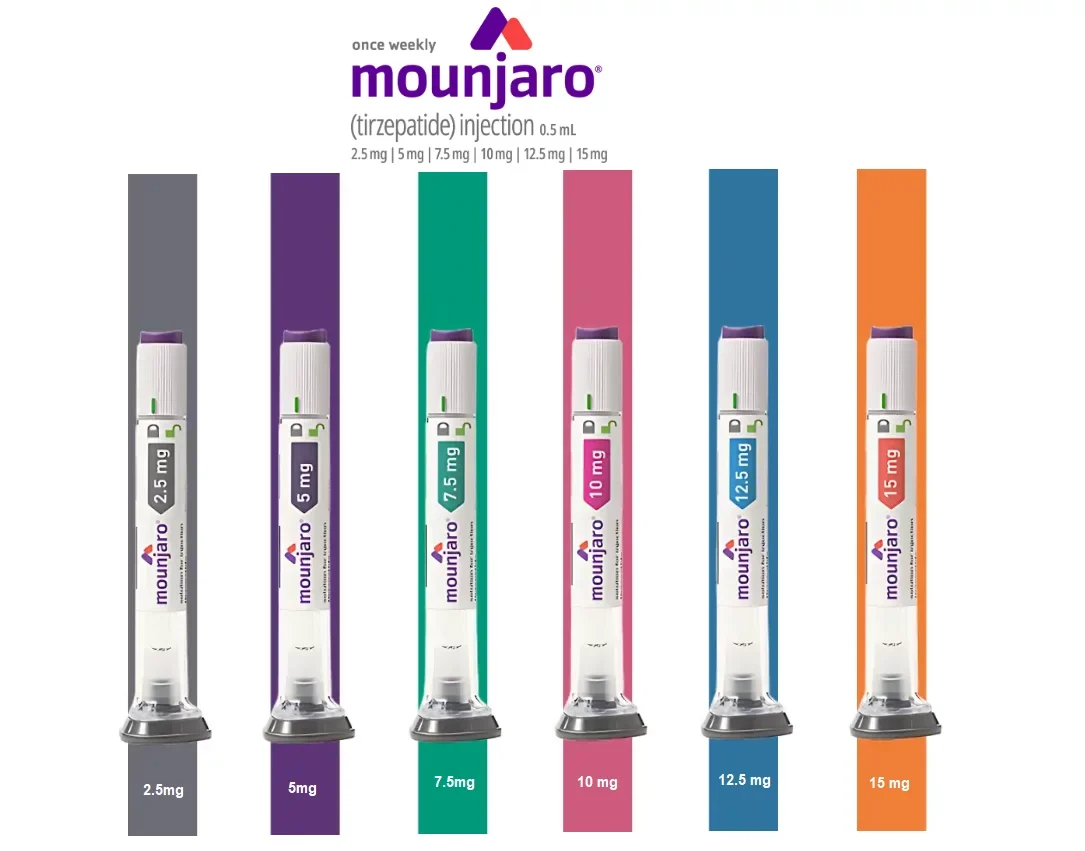
Mounjaro KwikPen strengths
Each KwikPen is intended to deliver four weekly doses of one strength (about a month if used on schedule). Use a new needle every injection. After the fourth dose, discard the pen even if liquid remains. Do not try to extract leftover solution.
Strengths: 2.5 mg, 5 mg, 7.5 mg, 10 mg, 12.5 mg, 15 mg per weekly dose.
How to use Mounjaro
- Pick a weekly day you can keep.
- Inject under the skin of the abdomen, thigh or upper arm. Not into a vein or muscle.
- Rotate sites to reduce irritation.
- New needle every time. Sharps bin for needles and used pens.
The device user manual in the pack is the instruction set to follow, not a video from social media.
Mounjaro missed dose
From the SmPC:
- If fewer than 4 days (96 hours) have passed, take the missed dose as soon as possible, then return to the usual weekly day.
- If more than 4 days have passed, skip the missed dose and take the next dose on the usual day.
- Leave at least 3 days (72 hours) between doses.
- Do not take two doses close together to “catch up”, including during titration.
What studies showed — and what they did not
SURMOUNT-1 enrolled adults without diabetes. At 72 weeks, with diet and activity support, average weight change from baseline was about 15.0% with 5 mg, 19.5% with 10 mg and 20.9% with 15 mg, versus about 3.1% with placebo (NICE clinical-effectiveness tables for TA1026). More people on tirzepatide reached 5%, 10% and 15% weight-loss thresholds than on placebo.
SURMOUNT-2 enrolled adults with type 2 diabetes. Average losses were smaller than in SURMOUNT-1.
These figures are trial averages under trial conditions. They are not a guarantee for an individual on a private pathway. People withdraw because of side effects. Weight can return if treatment and lifestyle support stop.
Side effects and safety
Common effects include nausea, diarrhoea, vomiting, constipation, reduced appetite, indigestion, abdominal discomfort and injection-site redness or itch. These are often worse when starting or after a titration step.
Practical measures people are often advised to try for mild nausea: smaller meals, slower eating, less very fatty food, and fluids. That does not replace clinical advice if symptoms are severe.
Seek urgent help for
- swelling of the face or throat, breathing difficulty, widespread rash
- severe, persistent abdominal pain (possible pancreatitis)
- sweating, shaking, confusion if you also use insulin or a sulfonylurea (possible hypoglycaemia)
- marked dehydration from vomiting or diarrhoea
Tell the prescriber about gallbladder disease, serious gastrointestinal disease, diabetic retinopathy if relevant, and all other medicines.
Interactions the BNF and SmPC highlight
- Insulin or sulfonylureas: doses may need to be reduced to lower the risk of hypoglycaemia.
- Oral combined contraceptives in people who are overweight or obese: reduced absorption cannot be excluded. Manufacturer advice is to switch to a non-oral method, or add a barrier method, for 4 weeks after starting and for 4 weeks after each dose increase.
- Other oral medicines: delayed gastric emptying may change how quickly some tablets are absorbed. The prescriber needs a full list, including those where timing matters.
Who may not be offered Mounjaro
- Pregnancy, planning pregnancy, or breastfeeding
- Allergy to tirzepatide or any pen ingredient
- Type 1 diabetes
- A history the prescriber judges unsafe, including pancreatitis — extra caution, and treatment may be refused
Wanting to lose weight, or having used a similar medicine before, is not by itself enough for a prescription.
Storage
- Unused pens: refrigerator 2–8°C. Do not freeze.
- Keep in the carton, protected from light.
- A pen in use may be kept at room temperature up to 30°C for the period in the leaflet only.
How a Curaphyx telemedicine consultation works
- Complete the questionnaire. Include BMI, medical history, pancreas and gallbladder history, gut disease, mental-health and eating-disorder history if asked, all medicines, and pregnancy status.
- Upload the identity and measurement checks requested.
- A UK-registered prescriber reviews the file.
- If Mounjaro is not suitable, it will not be prescribed. Another licensed option may be considered, or no medicine.
- If it is offered, the strength is chosen by the prescriber. You receive the licensed KwikPen, the leaflet, and follow-up. Dispatch is after approval.
Next-day delivery, where offered, applies to approved orders only.
Check the pharmacy on the GPhC register. Do not obtain pens from social media or any seller who skips a UK prescription. Counterfeit products are a documented risk (MHRA / GOV.UK advice on this class of medicine).
FAQs
How long do I stay on 2.5 mg?
Usually 4 weeks, unless the prescriber delays the first increase.
Do I have to go up to 15 mg?
No. Titration stops at the dose that is effective enough and tolerated.
Can I skip 7.5 mg or 12.5 mg?
Sometimes the plan goes 5 mg to 10 mg to 15 mg. Intermediate pens are there so the prescriber can go more slowly. That is a clinical choice, not a customer choice.
What if I miss a dose during titration?
Follow the 96-hour / 72-hour SmPC rules. Do not double up to stay “on track”.
Is private eligibility the same as NHS?
No. Licence, NICE TA1026 and NHS phased access are three different gates.
Can I reuse a pen after four doses?
No.
Do I still need diet and activity?
Yes. That is part of the licence.
Is Mounjaro the same as Wegovy?
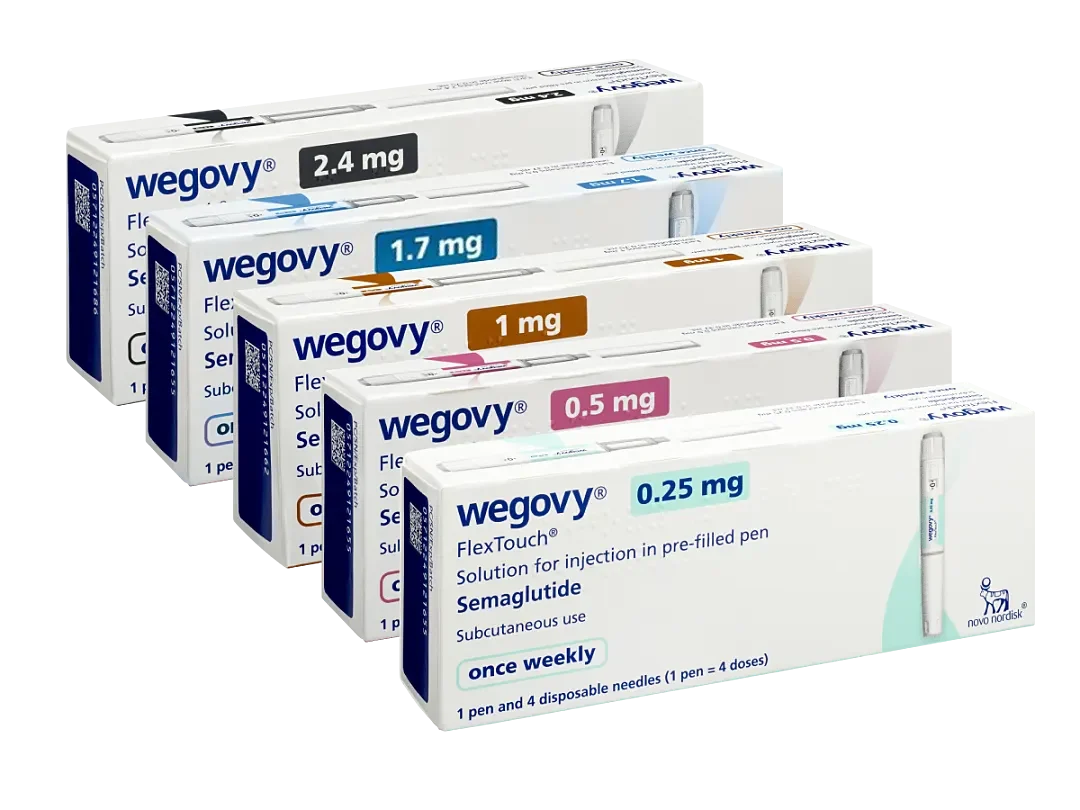
No. Wegovy is semaglutide (GLP-1 only). Mounjaro is tirzepatide (GIP and GLP-1). A prescriber chooses between licensed options; this page is not a comparison advert.
Will I definitely get a prescription if I pay?
No. Payment does not replace a prescriber decision.
References
- Electronic Medicines Compendium — Mounjaro KwikPen SmPC and PIL (indications, titration, missed dose, storage, oral contraceptives, device use)
- BNF, tirzepatide — indications and dose for diabetes and weight management, 5% review, insulin/sulfonylurea adjustment, interactions, POM status
- NICE TA1026 — tirzepatide for managing overweight and obesity (eligibility, ethnicity-adjusted BMI, 6-month review, SURMOUNT data tables)
- NICE TA924 — tirzepatide for type 2 diabetes
- NICE NG246 resources — medicines for adult weight management, use alongside diet and activity
- MHRA / GOV.UK — patient information on GLP-1 and related medicines; obtain only with a prescription from a legitimate pharmacy
A Curaphyx pharmacist or prescriber can explain the next step if you are unsure whether a consultation is appropriate.
Reviews
There are no reviews yet.